World structure
Mortal Shell II Open World: Map and Structure
[QUICK ANSWER]
Understand the Mortal Shell II open world through official wording, named regions, compact exploration, hidden structures, Beacons, and dungeon routes.
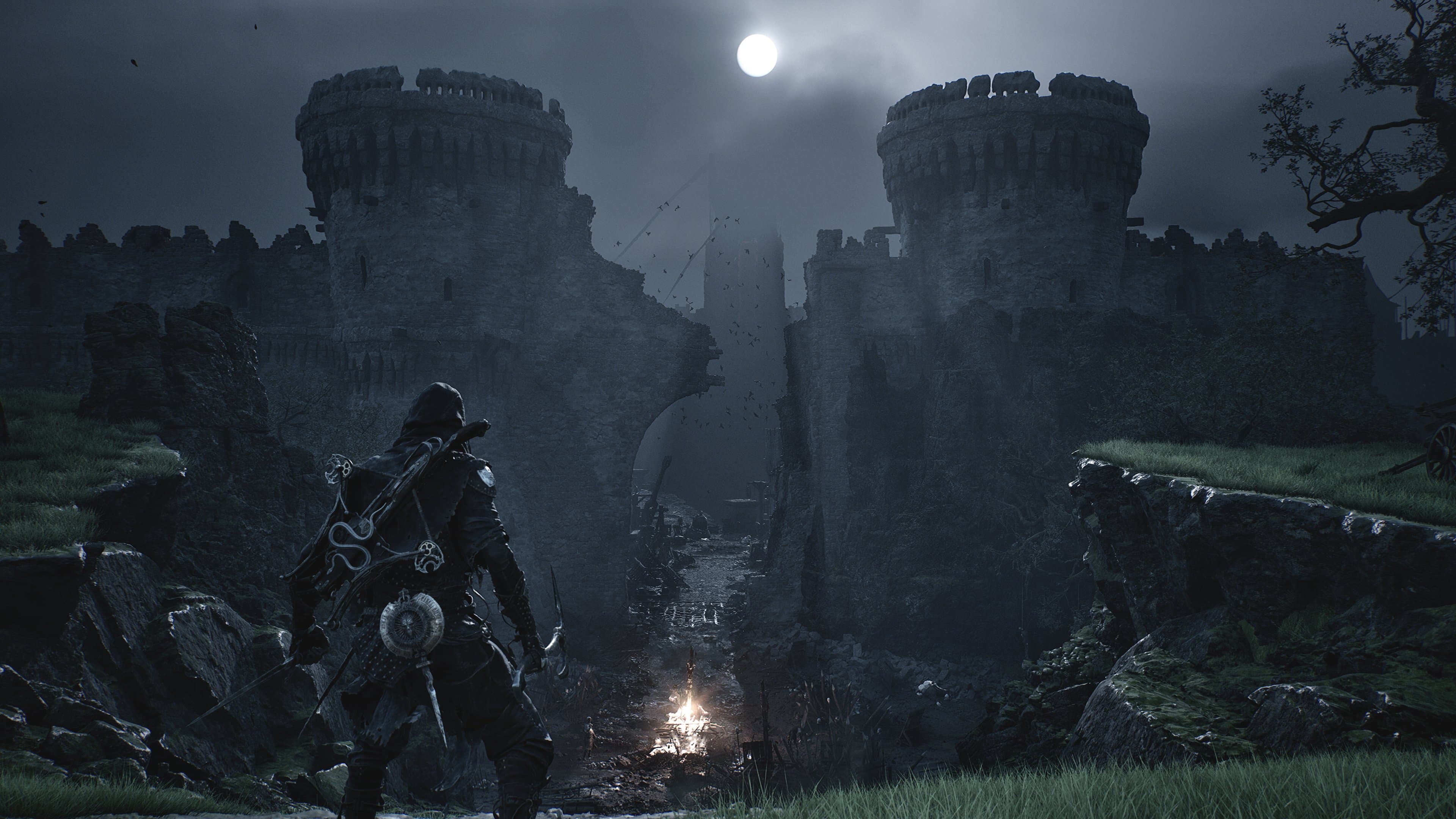
Mortal Shell II is described by the official site as a compact, interconnected open world built for free exploration and hidden structures. The available walkthrough material also names a sequence of regions and describes dungeons connected through that world. This is open-world exploration with gates, Beacons, corridors, fields, and optional discoveries—not a claim that every area is one uninterrupted open field.
What “open world” means here
The official wording emphasizes an interconnected world, free exploration, and hidden structures. That gives players room to move between areas and search beyond the most obvious path. The review evidence adds a practical caveat: open fields and corridors are connected through Beacons and gates, while signposting can be limited.
The result is a world that rewards checking side paths and keeping track of route connections. A map is useful because a missed Beacon or a gate can make a nearby region feel farther away than it is. This page focuses on structure rather than invented travel times or distances.
Named regions
The region guide lists the early route as Prologue, Widow’s Overlook, Mushroom Village, Sunken Village, Flooded Village, Blackridge Cliffs, Gloomshade Grove, Holding Cells, and Citadel of Penance. It also names Ruins of Nochte, Desolate Peak, Prisoners’ Domain, Stones of Remembrance, Temple of Vatra, Sanguine Caverns, and Outskirts of Mammon as later areas. A region name is an orientation anchor; use a focused guide for the exact item or dungeon route.
Holding Cells is especially useful for understanding the connections. The walkthrough says it bridges Blackridge Cliffs and Gloomshade Grove and can be approached from either side, while choosing Blackridge as the guide’s starting direction. That is a concrete example of a connected route rather than a linear level list.
Dungeons inside the wider map
The available weapon-guide description refers to more than 80 dungeons. It also presents a broad weapon route that includes the Iconoclast, Axe and Dagger, Veteran’s Battle Axe, Great Martyr’s Blade, Obsidian Hammer, Axatana, Black Needle, and Clockwork Scythe. The description connects the weapon guide to movesets, infusions, locations, and extensive upgrades, but it does not turn every dungeon into a fully documented location list.
Use dungeon names and item clues as navigation anchors, then open a dedicated walkthrough for the exact route. The Dungeon walkthrough covers the Holding Cells route separately; this overview does not turn every dungeon name into a loot guide.
Beacons, gates, and hidden structures
Beacons are useful route markers. The official description of hidden structures supports checking spaces that are not obvious from the main path, while the location reference groups Beacons, Shells, Dungeons, Merchants, Weapons, and Sidearms. A practical loop is to mark a route, inspect branches, and return to a Beacon when a connection becomes clear.
Use the region name, Beacon, gate, or dungeon entrance as the navigation cue, then check an important item against a dedicated walkthrough.
A practical exploration approach
Start with the nearest named Beacon, then use region names and dungeon entrances to build a local route. Record a gate or illusory-wall clue before moving on, especially when a key is required. If a route is unclear, compare the world description with the region walkthrough instead of inventing a shortcut.
The open-world label does not answer every question about progression. It describes the broad structure, while exact item placement, boss order, and optional paths need their own guides. This page keeps the world model broad and links to the focused pages with route details.
Further reading
Read the Mortal Shell II site, the Rock Paper Shotgun walkthrough, the weapon guide, and the review for broader context.